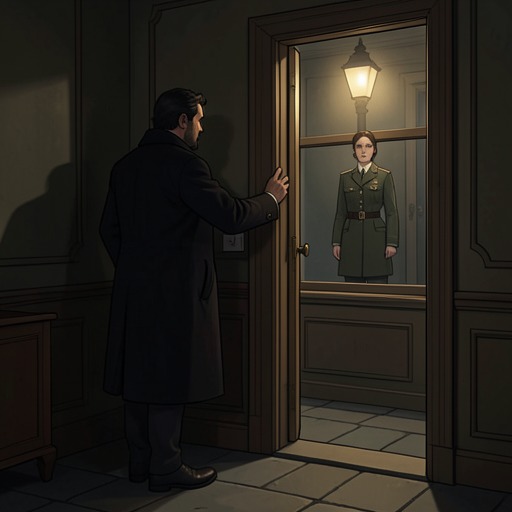
Rudi Grunwald
Los pacientes del doctor GarcíaRudi Grunwald is the young son of Johannes and Agneta Grunwald, born into a postwar Berlin household shaped by his mother’s changed loyalties, his father’s clandestine political commitments, and the presence of Adrián Gallardo. Although Rudi remains a child at the edge of the narrated action, the wooden horses suspended above his cradle make his home life tangible—and help bring Adrián from a tolerated guest into the family’s everyday orbit.
Identity and Family
In autumn 1947, Johannes, Agneta, and Rudi moved to Luitpoldstrasse, several months after Agneta’s mother, Beate Müller, died. Rudi is identified as the Grunwalds’ small child; the account supplies no further description of his age or later life. His place in the household nevertheless matters to the adults’ choices, especially as his parents’ marriage grows strained.
The Household and Its Conflicts
Rudi’s father remains committed to clandestine associations and continues paying their monthly dues, including to groups that preserve Nazi ideas and to Spanien oder Tod, which helps finance the escape of leaders with no choice but Spain or death. Agneta increasingly resents the risk Johannes takes with his family’s welfare, his job, and his freedom. She also recognizes that her own departure from the convictions she once shared has widened the distance between her and her husband. Rudi grows up within that private conflict, though the text does not attribute thoughts or actions to him.
Adrián’s Place in Rudi’s Early Life
During the Christmas season of 1947, Adrián stays in the Grunwald home. On Christmas morning, Agneta finds him on the dining-room floor with an open toolbox, repairing the chairs while Johannes and Rudi are still asleep. His work is more than a small domestic favor: he can both repair furniture and make things, and he has already crafted brightly painted wooden horses that hang from transparent threads over Rudi’s cradle.
The horses bring Adrián’s talent to the attention of Agneta’s father, who arranges an introduction to an acquaintance who owns a toy shop in central Berlin. Adrián gradually receives orders from that shop and its competitors. The work allows him to rent a room in a cheaper part of the Grunwalds’ neighborhood, and his departure ends the nearly three-month period in which he had been living under their roof. For Rudi, the toys are a gift; for the adults, they mark the arrival of an unusually capable and increasingly consequential presence in the household.
Narrative Significance
Rudi’s cradle gives the narrative a domestic measure of the postwar world: useful, carefully made objects coexist with political commitments that threaten the family’s security. The horses also connect the child to Adrián’s craft and, indirectly, to Agneta’s growing attachment to him. Rudi is not made an active participant in the later emotional conflict; instead, his presence sharpens its stakes, since the household being unsettled is also the home of a small child.